Why Choose Automation Solutions for Your Business Efficiency?
In today's fast-paced business landscape, companies face growing pressure to maximize efficiency. Automation Solutions are increasingly viewed as a key strategy. According to industry expert Emma Sinclair, “Automation can unlock new levels of productivity and creativity.” Her insights reflect a shift in how businesses approach operational challenges.
Companies that implement Automation Solutions often see significant improvements in workflow efficiency. Automating repetitive tasks frees employees to focus on strategic initiatives. Yet, many organizations struggle to adapt to these changes. Resistance to new technologies can hinder progress. Business leaders must consider the cultural impact of automation.
The journey to efficient operations is not without its challenges. Some companies push forward without fully assessing their needs. This can lead to overspending or poor integration. Automation Solutions should be tailored to specific business requirements. Reflecting on past experiences and adjusting strategies is crucial for long-term success.

Benefits of Automation Solutions for Enhancing Business Efficiency
Automation solutions can significantly enhance business efficiency. By streamlining repetitive tasks, companies can save time and reduce errors. Automated systems perform functions faster than humans. This allows employees to focus on more strategic initiatives. Reducing manual workload leads to higher job satisfaction. When people are less overwhelmed, they produce better results.
Moreover, automation means consistency. Machines deliver the same quality consistently, unlike human workers who may have off days. However, it’s crucial to acknowledge that automation is not a one-size-fits-all solution. Some processes may not translate well to automation. Businesses must carefully assess which areas to automate. A rushed implementation can lead to wasted resources.
Additionally, the cost of automation solutions can be high. Initial investments may seem daunting. Balancing expenses with the expected benefits requires thorough analysis. There’s a risk of over-automation, where the personal touch is lost. Finding the right balance between human input and technology is vital. Recognizing these challenges is part of the journey toward improved efficiency.
Types of Automation Solutions: Choosing the Right Fit for Your Business
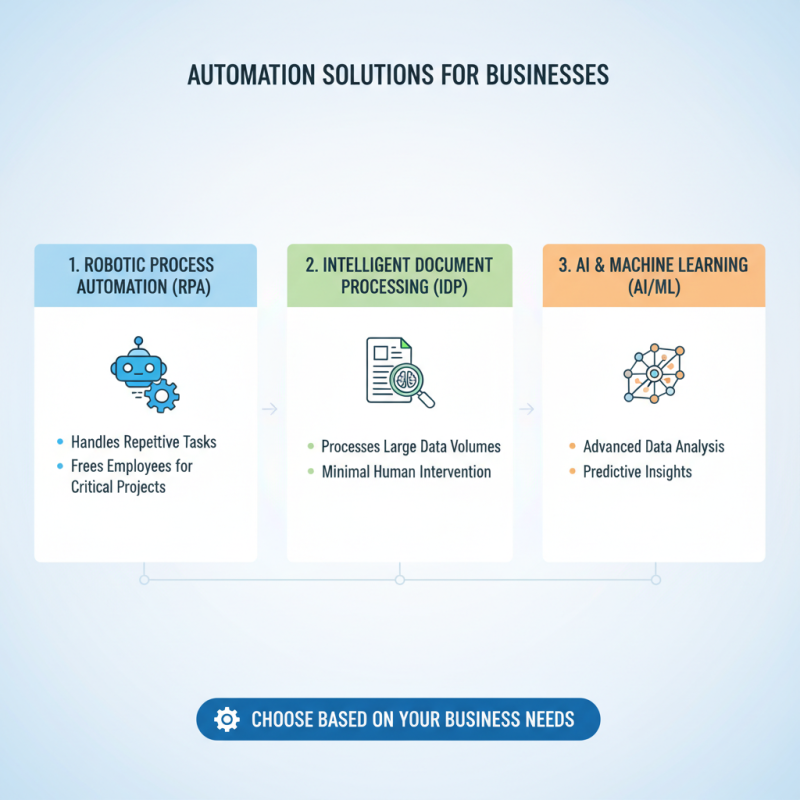
When selecting automation solutions, businesses have various options to consider. From robotic process automation (RPA) to intelligent document processing, each type of solution offers unique benefits. RPA can handle repetitive tasks, freeing employees for more critical projects. Intelligent solutions can process large volumes of data with minimal human intervention. However, understanding the specific needs of your business is crucial.
Choosing the right fit isn't always straightforward. Some businesses may hesitate due to cost concerns. Others may struggle with integration into existing systems. It's important to evaluate processes carefully before making a decision. Identify areas where automation can make a significant impact. Engage your team in discussions about potential benefits and downsides. Involve them in testing phases to better understand how the solution will work in practice.
Automation can streamline operations, but it’s not a magic bullet. The wrong choice can lead to inefficiencies. Continuous monitoring and adjustment are necessary to ensure effectiveness. Gathering team feedback after implementation can highlight areas for improvement. This iterative approach can help refine automated processes over time.
How Automation Reduces Operational Costs and Increases Productivity
Automation is transforming the way businesses operate. By implementing automation solutions, companies can significantly reduce operational costs. For instance, automating routine tasks can minimize the need for extensive manpower. This not only cuts labor costs but also reduces human error. When tasks are handled by machines, efficiency increases. Consider a factory: using robots to assemble products can speed up production times.
Productivity is another crucial advantage of automation. Employees can focus on more strategic tasks when mundane activities are automated. For example, data entry and scheduling can be automated, freeing staff to innovate. This shift not only boosts morale but also encourages creative problem-solving. However, it’s important to periodically evaluate automation systems. Sometimes, a fully automated process might overlook unique scenarios. Reflecting on these details is essential for continuous improvement.
Investments in automation can seem daunting. Initial costs may be high, and employees may worry about job security. Yet, the long-term benefits often outweigh these concerns. Businesses should remain flexible and adapt. Embracing change while addressing potential flaws ensures a smoother transition. Ultimately, automating operations leads to a more resilient business model.
Impact of Automation on Business Efficiency
Implementing Automation: Key Steps for a Successful Transition
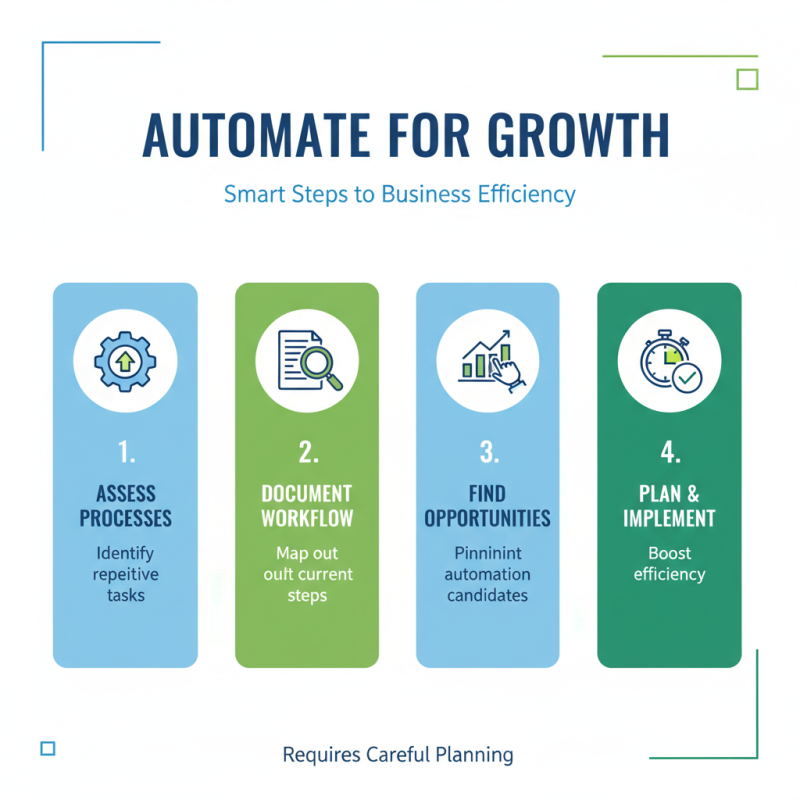
Implementing automation in your business can significantly enhance efficiency, but it requires careful planning. To begin this transition, assess your current processes. Look for repetitive tasks that consume valuable time and resources. This assessment not only identifies candidates for automation but also highlights potential challenges. Documenting these processes provides clarity and serves as a baseline for comparison post-implementation.
Once you pinpoint tasks to automate, choose the right tools. Not every automation solution fits all businesses. Take time to train your team on new systems. This transition may generate resistance. Some employees might fear job losses, which can impact morale. Open communication helps counter this. Address concerns, and emphasize how automation will free them for more meaningful work.
Pilot your automation with one department or task. Monitor performance and gather feedback. It’s crucial to track unexpected issues. Some processes might not operate as efficiently as anticipated. Use these insights to refine your approach. Flexibility is essential, and being willing to adapt will ultimately lead to a more successful automation journey.
Measuring the Impact of Automation on Business Performance Metrics
Automation solutions can significantly enhance business performance metrics. They streamline processes and minimize human error. For instance, automated data entry can reduce the time spent on mundane tasks. This leads to faster decision-making and improved accuracy. Additionally, it frees up employees to focus on higher-value work.
Measuring the impact of automation is critical. Businesses should track metrics like productivity, operational costs, and employee satisfaction. A small business might see a 20% increase in productivity after implementing automated workflows. However, not all automation leads to immediate success. Some may find resistance from employees or initial setup challenges. These issues require careful consideration and adjustment.
The real consequences of automation can vary widely. While some may flourish, others could struggle. Reflecting on what works and what doesn’t is essential. Continuous evaluation of automated processes ensures they align with overall business goals. This reflective approach helps in maximizing the benefits of automation for every unique business environment.
Why Choose Automation Solutions for Your Business Efficiency? - Measuring the Impact of Automation on Business Performance Metrics
| Metric |
Before Automation |
After Automation |
Improvement (%) |
| Operational Costs |
$250,000 |
$180,000 |
28% |
| Employee Productivity (Hours) |
1,500 |
2,200 |
47% |
| Customer Satisfaction (%) |
75% |
90% |
20% |
| Sales Growth (%) |
5% |
15% |
200% |
| Cycle Time (Days) |
30 |
15 |
50% |