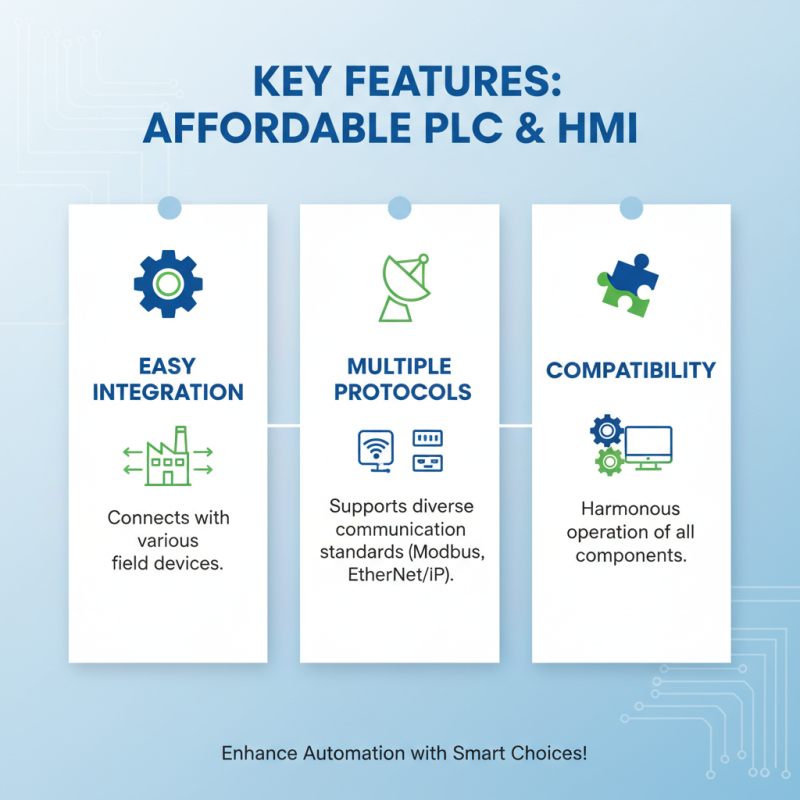
Why Choose a Low Cost PLC With HMI for Your Automation Needs?
The industrial automation landscape is rapidly evolving. A significant trend is the adoption of "Low Cost PLC With HMI" solutions. These systems provide businesses a cost-effective approach to automation needs. According to a report by MarketsandMarkets, the global PLC market is expected to reach USD 13.78 billion by 2025, growing at a CAGR of 5.5%. Many manufacturers are now seeking affordable options to enhance their operations while keeping budgets in check.
Low-cost PLCs paired with HMIs offer functionalities similar to their high-end counterparts. They enable monitoring and control of various processes seamlessly. A survey by IndustryWeek indicated that over 70% of manufacturers prioritize cost efficiency in automation investments. However, organizations must be cautious about the potential limitations. These affordable solutions may not include advanced features found in premium models.
The balance between cost and capability is delicate. Investing in a low-cost PLC with HMI can offer immediate financial relief. Yet, companies must assess their long-term automation goals. Ensure that the selected system can grow with evolving demands. This conscious choice can prevent future constraints, maintaining operational efficiency in a competitive market.
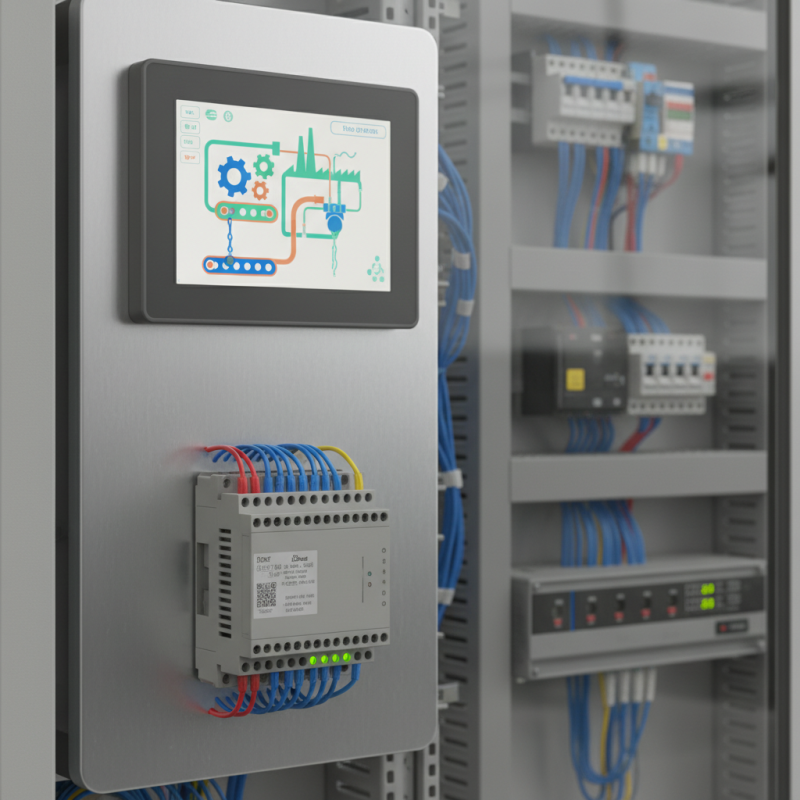
Benefits of Low Cost PLCs in Automation Systems
Low cost PLCs are transforming automation systems. They deliver essential functions at a fraction of traditional costs. According to a report by a leading industry research firm, the global market for low-cost PLCs is expected to grow by 8.5% annually through 2025. This growth highlights the increasing adoption of budget-friendly automation solutions.
Industries are drawn to low-cost PLCs for their ease of use and integration. An HMI (Human-Machine Interface) paired with a PLC enhances user interaction. Operators can monitor processes in real-time, resulting in faster decision-making. Reduced complexity lowers training requirements, enabling quick onboarding of staff.
Yet, cost reduction may have trade-offs. Some low-cost PLCs might lack advanced features seen in pricier alternatives. Users should carefully assess their specific needs. Balancing budget with functionality is vital. Understanding these nuances ensures organizations make informed choices. Emphasizing reliability remains critical. As automation demands rise, so does the importance of selecting the right PLCs.
Understanding the Role of HMI in Industrial Automation
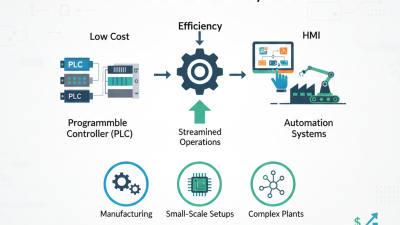
In today's industrial landscape, Human-Machine Interfaces (HMI) play a crucial role in automation systems. According to a recent report by the International Society of Automation, over 60% of manufacturing facilities are now integrating HMI with Programmable Logic Controllers (PLC). This combination streamlines operations and enhances productivity. A low-cost PLC equipped with an effective HMI can dramatically improve plant efficiency and reduce operational costs.
An effective HMI allows operators to visualize processes in real-time. With user-friendly interfaces, staff can quickly identify bottlenecks. Enhanced visualization leads to faster decision-making. Statistics show that facilities using advanced HMI systems see a 30% boost in response time to equipment failures. However, the effectiveness of HMI can vary based on its design and usability. A poorly designed interface may confuse operators and lead to increased downtime.
Tips: Focus on intuitive design when choosing an HMI. Ensure that it matches the skill levels of your operators. Regular training on HMI usage can lead to better performance. Emphasize the importance of customizing HMI systems to fit specific operational needs. This tailored approach is often overlooked, yet it’s vital for maximizing your automation investment. Remember, the right HMI can elevate not just productivity but also employee satisfaction.
Why Choose a Low Cost PLC With HMI for Your Automation Needs?
Comparative Analysis: Low Cost PLCs vs. High-End Alternatives
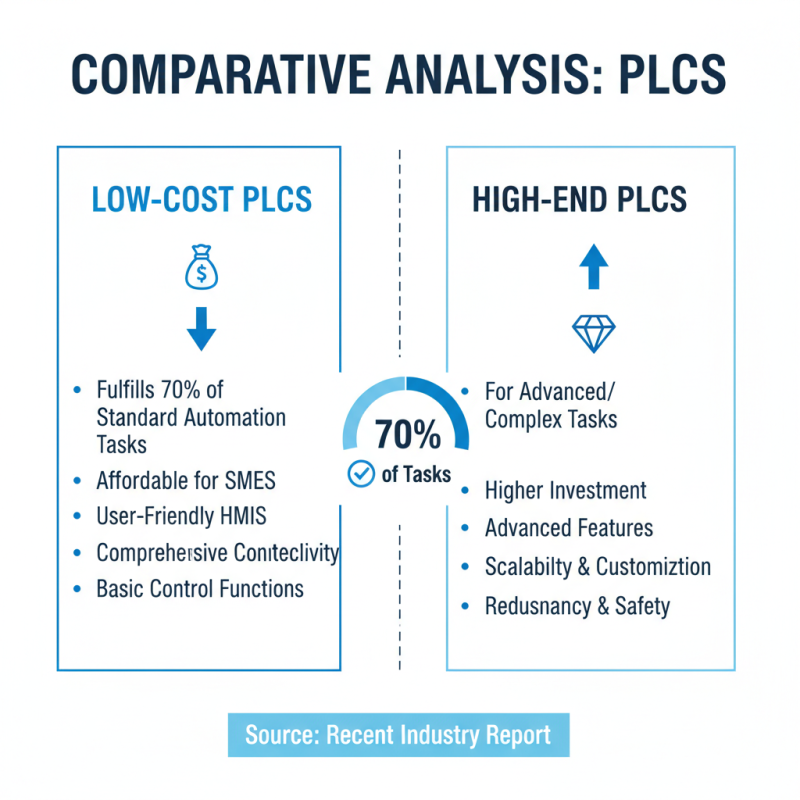
When considering automation solutions, a comparative analysis reveals significant differences between low-cost PLCs and high-end alternatives. According to a recent industry report, low-cost PLCs can fulfill up to 70% of standard automation tasks effectively. Their affordability often attracts small and medium enterprises seeking to improve efficiency without overspending. Moreover, these systems offer essential features such as user-friendly HMIs, comprehensive connectivity, and basic control functions.
However, high-end PLCs promise advanced features, such as enhanced processing power and superior reliability. A study indicated that these systems could be up to 50% faster in processing complex tasks. They are a better choice for projects demanding high precision and performance. Yet, the gap between performance and cost becomes a critical consideration. Businesses must weigh the investment against project demands and long-term benefits. Cost-effective PLCs often fall short in scalability, which can lead to future expenses.
The choice of automation solution significantly impacts operational workflows. While low-cost options cater to budget constraints, high-end PLCs provide sophisticated capabilities. Evaluating specific needs and potential growth is crucial for making an informed decision. Each option presents unique strengths and limitations that require careful consideration.
Case Studies: Successful Implementations of Low Cost Automation Solutions
Low-cost automation solutions are proving effective in various industries. A recent report from Research and Markets highlights that low-cost PLCs with HMIs can reduce operational costs by 30% for small to medium-sized enterprises. Many manufacturers are embracing this technology to enhance efficiency without compromising quality.
Case studies reveal remarkable success. For instance, a food processing plant implemented a low-cost automation solution. They reported a 40% increase in production capacity. Before this change, manual processes led to frequent errors and downtime. By switching to automated systems, they optimized workflow and improved product consistency.
However, there are challenges. Some companies underestimated the initial training required for staff. Transitioning to automation necessitates new skills and knowledge. Inadequate training can lead to underutilization of these systems. Companies must address this to fully realize automation's benefits. Balancing cost and effectiveness is essential for long-term success.