What is Plc Automation and How Does it Work?
In recent years, Plc Automation has emerged as a game-changer in the manufacturing industry. James Carter, a leading expert in automation technologies, once said, “Plc Automation is the backbone of modern industrial processes.” His insight highlights the critical role it plays today.
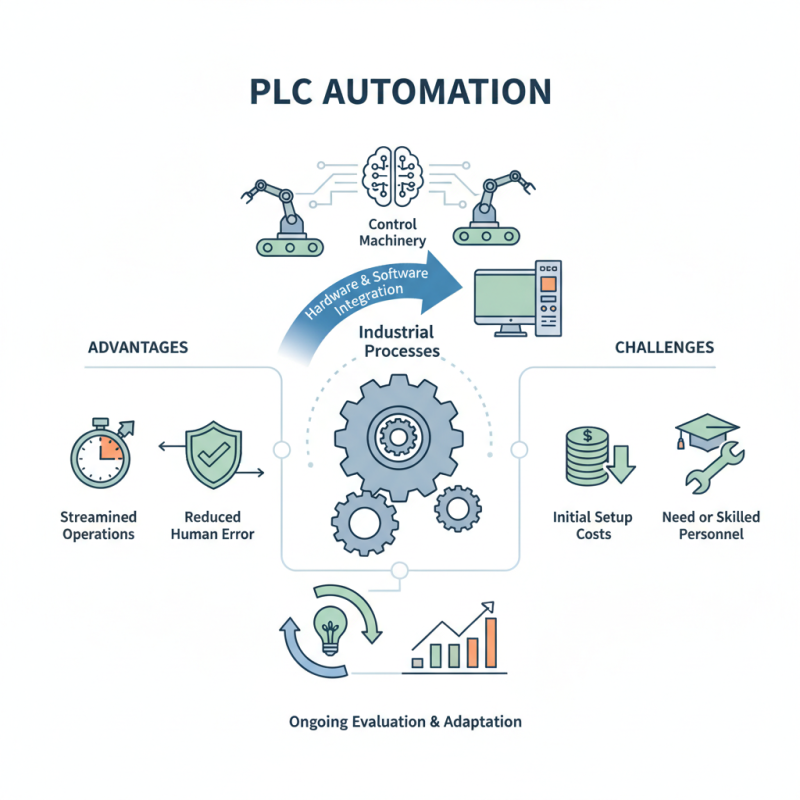
Plc Automation integrates hardware and software to control machinery and processes. It offers flexibility and precision, which traditional methods often lack. Manufacturers can streamline operations and reduce human error. However, companies may struggle with the initial setup costs and the need for skilled personnel.
While Plc Automation presents many advantages, it also requires ongoing evaluation. The rapid pace of technology means businesses must adapt continuously. As Carter emphasizes, “Embracing innovation is key to staying competitive.” Without reflection and adaptation, even the best systems may fall short over time.
What is PLC Automation: Definition and Overview
PLC automation stands for Programmable Logic Controller automation. It's a method used to control industrial processes. These processes may include machinery, conveyor systems, or any equipment that requires high reliability. PLCs use a computer-based system to manage these tasks. They take input from sensors and make real-time decisions. This technology is crucial in various sectors, from manufacturing to food processing.
Understanding PLC automation involves grasping its core aspects. It hinges on programming logic that defines how equipment should operate. A single program can control multiple machines. This creates efficiency but can also introduce complexities. For instance, if a program has a flaw, it may disrupt the entire operation. The need for precise coding is paramount. Even a small error can lead to significant downtime.
In practical terms, PLCs can be challenging to master. Operators must understand both hardware and software components. Often, settings require tweaking based on specific needs. Common issues include difficulty in troubleshooting or adapting the system. These factors highlight the necessity for ongoing training and system updates. Embracing PLC technology can drive progress, but it demands attention to detail and continuous improvement.
The Role of PLCs in Industrial Automation Processes
PLCs, or Programmable Logic Controllers, are crucial in industrial automation processes. They serve as the backbone for controlling machinery and processes. According to a recent report by the International Society of Automation, the PLC market is projected to reach $14.6 billion by 2030, highlighting their growing importance.
In factories, PLCs streamline operations. They manage assembly lines, monitor equipment, and ensure quality control. For instance, a single PLC can control thousands of I/O points. This capability reduces the need for extensive wiring and manual intervention. However, reliance solely on PLCs can create vulnerabilities. If a PLC fails, the entire production line can suffer downtime. Companies must regularly assess their backup systems to mitigate this issue.
Additionally, PLC programming requires specialized skills. The learning curve can be steep for many workers. A Skills Gap Report indicated that 48% of employers faced challenges finding qualified personnel. Efforts are needed to train the workforce effectively. Without this, the potential of PLCs may not be fully realized.
PLC Automation in Industrial Processes
Key Components of PLC Systems and Their Functions
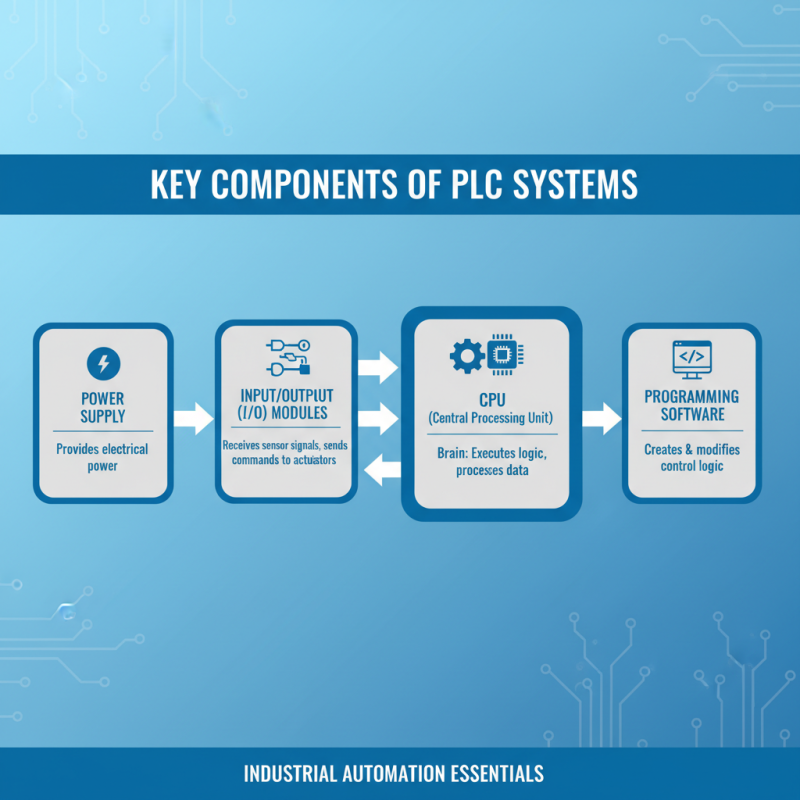
Programmable Logic Controllers (PLCs) are essential in industrial automation. Key components of PLC systems include the CPU, input/output (I/O) modules, power supply, and programming software. The CPU is the brain, executing control commands based on a programmed logic. It processes inputs from sensors and sends outputs to actuators.
The I/O modules connect the PLC to the external environment. Input modules gather data from sensors like temperature and pressure. Output modules send commands to devices, such as motors and valves. This interaction is crucial for effective automation.
Power supplies ensure the PLC operates smoothly. They convert line voltage to the low voltage the PLC needs. Lastly, programming software allows users to create and modify control logic. This aspect can be challenging. Mistakes in logic can lead to equipment malfunctions. Regular updates and careful programming are necessary for efficiency. Understanding these components provides insight into PLC operation and their role in modern automation.
Benefits of Implementing PLC Automation in Manufacturing
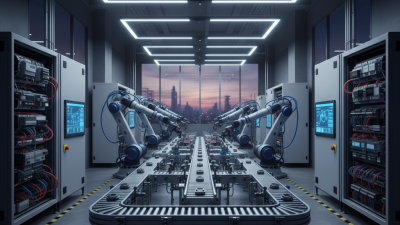
PLC automation is transforming the manufacturing landscape. One significant benefit is the optimization of production processes. With PLC systems, manufacturers can streamline operations, reducing the chances of human error. Automating repetitive tasks saves time and increases efficiency. For example, a factory can use PLCs to control conveyor belts and robotic arms, resulting in smoother workflows.
Another key advantage is real-time data monitoring. PLCs provide immediate insights into machine performance and production rates. These insights allow for quick decision-making when issues arise. A sudden drop in output can be addressed instantly, minimizing downtime. However, not all systems are infallible. Proper maintenance and regular software updates are essential to avoid glitches.
Cost savings are also notable. While the initial investment may be high, the long-term savings on labor and wastage are worth it. Companies might struggle with the implementation process, but the benefits often outweigh these challenges. Employees may need training to adapt to new systems. Overall, the shift to PLC automation represents a significant leap forward in manufacturing efficiency.
What is Plc Automation and How Does it Work? - Benefits of Implementing PLC Automation in Manufacturing
| Dimension |
Description |
Benefits |
| Increased Efficiency |
PLC systems automate repetitive tasks within the manufacturing process. |
Higher production rates and reduced cycle times. |
| Improved Quality Control |
Real-time monitoring and data collection allow for enhanced quality checks. |
Reduction in errors and enhanced product quality. |
| Flexibility |
Easily reprogrammed to adapt to new manufacturing processes. |
Allows for quick adaptation to market changes. |
| Cost Reduction |
Automating processes reduces labor costs and minimizes waste. |
Overall reduction in operational costs. |
| Data Analytics |
PLC systems provide valuable data for analysis and reporting. |
Informed decision-making and strategic planning. |
| Safety Improvements |
Automating hazardous tasks limits human exposure to risks. |
Enhanced workplace safety and reduced injury rates. |
Future Trends in PLC Automation: Data Integration and IoT
PLC automation is rapidly evolving with the integration of IoT technologies. Reports indicate that the global PLC market is expected to reach $10.89 billion by 2027, reflecting a significant growth trend. Companies are increasingly adopting IoT solutions to enhance data integration capabilities. This shift is crucial for real-time monitoring and decision-making.
Data collected from various IoT devices provides valuable insights. This can lead to more efficient operations and reduced downtime. However, there are challenges. Data security and interoperability remain concerns. Not all PLC systems integrate seamlessly with new IoT devices. Such gaps can complicate the implementation process. Organizations must carefully evaluate their existing infrastructure.
Future trends indicate a move towards edge computing in PLC systems. This approach allows data processing closer to its source, minimizing latency. According to a recent study, 61% of manufacturing companies plan to adopt edge computing by 2026. Nevertheless, companies must balance innovation with practical limitations. Implementing these technologies requires significant investment and skill development. The path forward may not be straightforward, but the potential rewards are tremendous.