Top Tips for Choosing the Best Industrial PLC Solutions?
Choosing the right Industrial PLC can significantly impact your automation processes. It's crucial to understand the various options available. Not all PLCs are created equal, and selecting the best solution requires careful consideration.
Industries rely on programmable logic controllers (PLCs) for operational efficiency. With a variety of vendors and models, making a decision can feel overwhelming. Consider factors like compatibility, scalability, and support when evaluating options. Many users overlook these aspects and later face integration challenges.
The landscape of Industrial PLCs continues to evolve. New technologies emerge frequently, which can influence your choice. It’s essential to stay informed about trends and innovations. A well-informed decision not only boosts productivity but also minimizes downtime in the long run. Evaluating your needs carefully will lead to better outcomes.
Understanding the Basics of Industrial PLC Systems
Industrial PLC systems are critical for automation in various sectors. These programmable logic controllers allow for reliable control of machinery and processes. Understanding their basics can significantly improve your operational efficiency.
A PLC typically consists of a central processing unit (CPU), input/output (I/O) modules, and a programming interface. The CPU interprets inputs and executes control logic, while I/O modules connect physical devices. Learning how these components interact is essential for selecting the right solution.
Industrial PLCs vary in scalability and complexity. Some systems are suited for simple tasks, while others handle complex processes with multiple variables. The challenge is choosing the most appropriate system for your needs. Not every option will fit every application smoothly. Testing and adjustments may be necessary after implementation. This iterative approach can lead to more tailored and effective solutions.
Top Tips for Choosing the Best Industrial PLC Solutions
| Criteria |
Description |
Importance Level |
| Scalability |
Ability to expand system capabilities without major overhauls. |
High |
| Compatibility |
Integration with existing hardware and software systems. |
High |
| Ease of Programming |
User-friendly programming interfaces and languages. |
Medium |
| Reliability |
Stable performance in various operating conditions. |
High |
| Support and Maintenance |
Availability of technical support and maintenance services. |
Medium |
| Cost |
Total cost of ownership, including purchase and operation costs. |
High |
| Cybersecurity Features |
Measures in place to protect against cyber threats. |
High |
Key Features to Consider in Industrial PLC Solutions
When considering industrial PLC solutions, several key features are crucial. Reliability is paramount. You want a system that can operate nonstop without failures. A robust architecture helps ensure this. Additionally, ease of programming deserves attention. A user-friendly interface allows engineers to adapt quickly and efficiently, minimizing downtime.
Scalability is another essential aspect. As operations grow, the PLC should be able to handle increasing complexity. Flexibility in expansion capabilities is vital. Moreover, integration with existing systems can save time and resources. Compatibility with various protocols enhances functionality, but not all systems offer this.
Lastly, support and documentation are often overlooked. A solution backed by comprehensive resources can make a significant difference. Assess how easily guidance is available when issues arise. Investing time to evaluate these features helps in making informed decisions, paving the way for successful automation.
Evaluating Performance and Reliability of PLCs
When assessing the performance and reliability of industrial PLCs, a structured approach is essential. Start by examining the specifications. Look for processing speed, memory size, and I/O capabilities. Each aspect plays a critical role in how the PLC will perform in different scenarios. Not all PLCs are created equal, and even slight differences can impact overall efficiency.
Reliability is often determined by how a PLC handles stress and failures. Review users' feedback from real-world applications. Does the system recover quickly from failures? How often do users report issues? Sometimes, the most robust PLCs can exhibit vulnerabilities in unexpected conditions. Testing under various loads and conditions can help reveal such weaknesses.
Consider support and documentation as well. Reliable documentation can shorten the learning curve and troubleshoot issues more effectively. User communities can also provide insights into long-term reliability. They share experiences that might not be included in formal specifications. An investment in a high-performing, reliable PLC is based not just on specs, but also on real-world insights.
Top Tips for Choosing the Best Industrial PLC Solutions
This chart compares the performance and reliability of various industrial PLC solutions based on factors such as processing speed, input/output capacity, and failover capabilities, which are crucial for manufacturers when choosing the best option for their needs.
Assessing Integration and Compatibility with Existing Systems
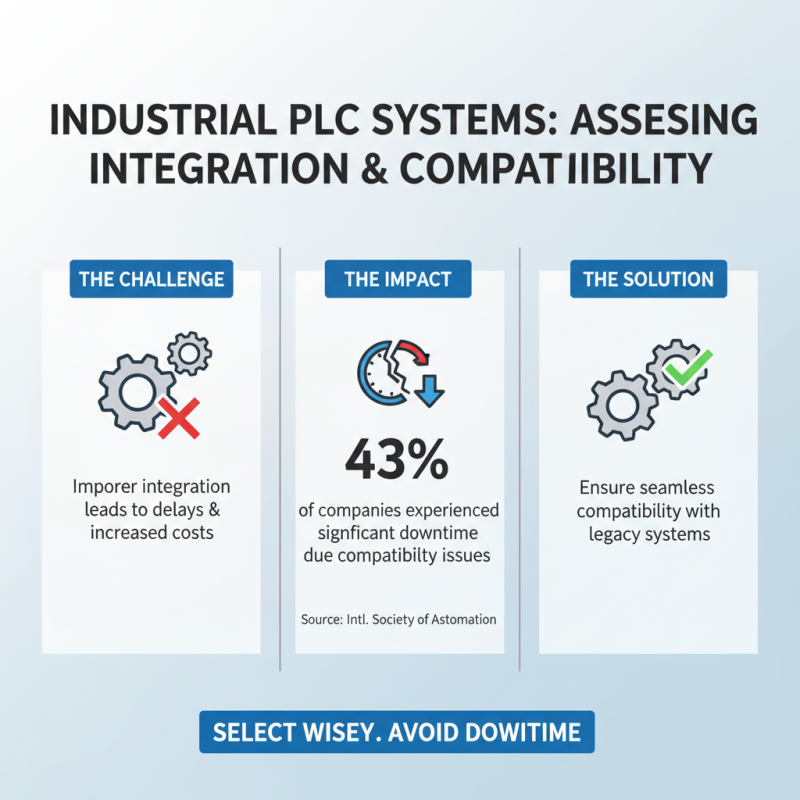
When selecting industrial PLC (Programmable Logic Controller) solutions, assessing integration and compatibility with existing systems is crucial. Research indicates that improper integration can lead to delays and increased costs. A study by the International Society of Automation found that 43% of companies experienced significant downtime due to compatibility issues. This statistic highlights the importance of ensuring that new PLCs can work seamlessly with legacy systems.
Compatibility goes beyond mere connections. It's about communication protocols, data formats, and the potential need for customization. A survey from the Automation Federation revealed that 57% of organizations reported frequent integration challenges. This often stems from a lack of standardized protocols. Industrial environments often use a mix of systems from different eras. Outdated components can create vulnerabilities.
Assessing integration should include testing and validation phases. It’s not enough to rely on documentation; hands-on trials can reveal hidden issues. Many organizations overlook this step, assuming compatibility will naturally occur. However, without real-world testing, problems can emerge post-implementation. In fact, nearly 30% of industrial failures correlate with inadequate testing. Such oversight can have lasting repercussions on productivity and reliability.
Cost Analysis and Budgeting for PLC Investments
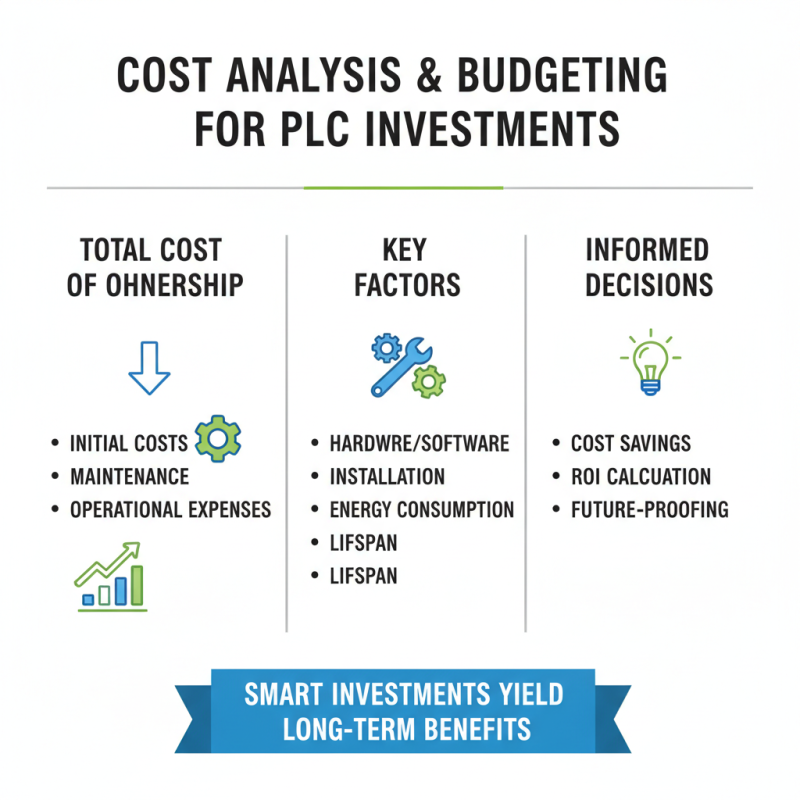
When considering PLC investments, cost analysis plays a critical role. Begin by determining the total cost of ownership. This includes initial costs, maintenance, and operational expenses. A thorough understanding of these factors helps make informed decisions.
Budgeting for PLC solutions can be complex. It’s essential to factor in both short-term and long-term needs. Look beyond just purchasing costs. Hidden costs, such as training and integration, can add up quickly. It's easy to overlook these elements, but they significantly impact the overall investment.
Evaluating vendor proposals is crucial. Often, costs may seem competitive at first glance. However, a closer look reveals differences in reliability and support. A low price does not always equate to value. Conducting a detailed analysis ensures a balanced approach. Remember, investing in quality solutions can yield significant returns in efficiency and productivity.