Top Control Systems in China for Global Buyers How to Choose?
Control Systems play a crucial role in various industries, from manufacturing to energy management. According to a recent report by ResearchAndMarkets, the global control systems market is expected to reach $150 billion by 2026, with China being one of the key players. This rapid growth reflects the increasing demand for automation and efficiency in production processes.
In China, numerous companies specialize in advanced control systems. They offer solutions that enhance operational efficiency and reduce costs. A study by MarketsandMarkets noted that the adoption of Industrial Internet of Things (IIoT) technologies has fueled innovation in control systems. This creates opportunities for global buyers looking for cutting-edge technology.
Selecting the right control system can be challenging. Consider factors like compatibility, scalability, and support services. The quality of local vendors matters. It is wise to evaluate case studies and customer feedback. This will help buyers make informed decisions. The market's complexity requires careful analysis and a strategic approach.

Top Control Systems in China: Overview of Major Players
China's control systems industry has seen significant growth, becoming a global hub for automation. Major players include state-owned and private enterprises. A report from MarketsandMarkets indicates that the Chinese market for control systems is poised to reach USD 10 billion by 2025, growing at a CAGR of 8.5%. This indicates robust demand and a competitive landscape.
Understanding the competitive nature of the industry is essential. Companies are investing heavily in R&D. A focus on innovation leads to advanced capabilities. With smart manufacturing gaining traction, integrating IoT into control systems is becoming a priority. Adjustments to regulations may also impact operational strategies.
**Tip:** When selecting a control system, assess not just technology but also the vendor’s reliability. Seek systems that offer scalability to adapt to future needs.
There are challenges as well. Quality can vary widely among providers. Not all suppliers meet international standards, which can lead to potential risks. Thorough research is crucial in identifying reputable players.
**Tip:** Look for industry certifications and client testimonials. They can provide insight into a provider’s dependability.
Top Control Systems in China for Global Buyers
| Feature |
Specification |
Price Range |
Market Share (%) |
Customer Support |
| Automation Level |
Full Automation |
$5000 - $15000 |
25% |
24/7 Support |
| System Compatibility |
Multi-Platform |
$3000 - $12000 |
20% |
Business Hours Support |
| User Interface |
Intuitive Design |
$4000 - $10000 |
15% |
Online Support |
| Customization Options |
High |
$6000 - $20000 |
30% |
Priority Support |
| Integration Capability |
Seamless |
$7000 - $18000 |
10% |
Email Support |
Market Analysis: Growth Trends in China's Control Systems Industry
China's control systems industry is experiencing significant growth. This development aligns with global trends in automation and digital transformation. As companies shift towards smart manufacturing, the demand for advanced control systems increases. This shift presents opportunities for global buyers looking to invest in Chinese solutions.
Tips: Identify your needs first. Assess your current infrastructure. Determine the specific functionalities required.
The rise of artificial intelligence and IoT is reshaping the sector. This technological evolution leads to enhanced efficiency and accuracy. Buyers must consider the scalability of solutions. A flexible system can adapt to future architectural changes.
Tips: Research extensively. Look for local partnerships. Engage with suppliers to understand their capabilities.
However, challenges remain. Quality control and standardization can vary. Some manufacturers may not meet international benchmarks. It's crucial to evaluate the reliability of partners before committing. Engage with industry experts for insights.
Factors to Consider When Choosing Control Systems for Global Markets
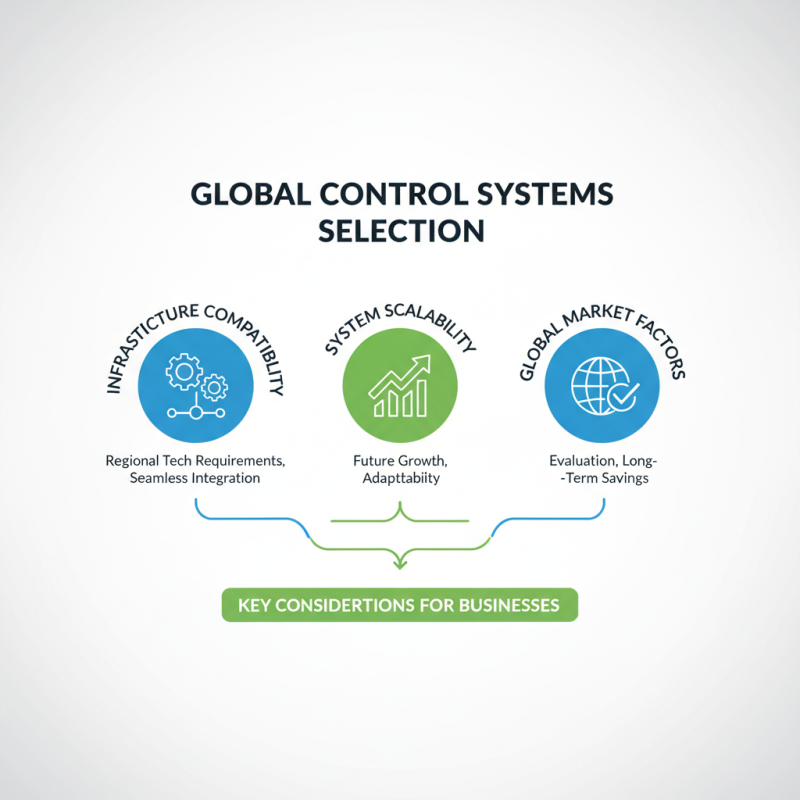
When selecting control systems for global markets, several key factors come into play. One must evaluate the compatibility of the control system with existing infrastructure. Different regions have distinct technical requirements. Ensuring seamless integration is crucial. Additionally, consider the scalability of the system. As businesses grow, their needs change. A scalable solution can save time and resources in the long run.
Another vital aspect is the support and service offered by the supplier. Reliable customer service can significantly impact operational efficiency. It's important to assess whether the company provides timely support and updates. Many buyers overlook this and face challenges later. Moreover, examining the system’s adaptability to new technologies is essential. Flexibility can enhance system longevity and performance.
Lastly, cost-effectiveness should be weighed against quality. Cheaper options might seem appealing initially but can lead to costly repairs or replacements. A thoughtful investment in a high-quality control system can ultimately yield better returns. However, this also raises questions about budget constraints and potential trade-offs. Reflecting on priorities will guide better decision-making.
Comparative Review: Key Features of Leading Chinese Control Systems
When global buyers consider control systems from China, key features play a vital role in decision-making.
The market is rapidly evolving, supported by a 2023 report from Statista, indicating over 25% growth in the control systems sector.
Customization, integration capabilities, and user-friendly interfaces are often highlighted as critical attributes.
Data from TechNavio reveals that leading control systems effectively utilize AI
and machine learning algorithms. These technologies enhance predictive maintenance
and improve efficiency metrics. However, challenges remain. Many systems struggle with interoperability among different platforms.
Buyers should eye vendor support to tackle these potential issues effectively.
Tips: Assess integration flexibility and future scalability before making a selection.
Understanding your specific operational needs is crucial. Additionally, consider user training as part of the overall investment.
This ensures that your team can effectively leverage the system's features.
Future Outlook: Innovations Shaping China's Control Systems Landscape
The landscape of control systems in China is rapidly evolving. Innovations are transforming industries, enhancing efficiency and reliability. Smart technologies like artificial intelligence and machine learning drive these changes. They enable better data analysis, optimizing operations across sectors.
Emerging trends indicate a shift towards decentralization in control systems. This approach allows for more resilient operations. However, some organizations struggle to integrate these innovations effectively. There is a common challenge in aligning new technologies with existing systems.
Sustainability is also a key factor. Many companies aim to reduce their carbon footprint. Eco-friendly control systems can help achieve this goal. Nonetheless, the balance between innovation and practicality remains delicate. Continuous improvement is essential. Understanding these nuances will help global buyers navigate China's complex market.