2026 Top Distributed Control System Trends You Should Know?
In recent years, the field of automation has seen significant advancements. Among these, the Distributed Control System (DCS) stands out. DCS is crucial for industries like oil and gas, pharmaceuticals, and power generation. This system allows for efficient control of complex manufacturing processes. As we look ahead to 2026, understanding the emerging trends in DCS is vital for professionals.
One key trend is the integration of artificial intelligence. AI enhances decision-making capabilities within DCS. It also brings predictive maintenance to the forefront. Remote monitoring and management continue to evolve, thanks to cloud technologies. These innovations may lead to reduced operational costs and improved safety. However, the reliance on technology raises concerns about cybersecurity. Vulnerabilities in the system can have catastrophic consequences.
Another trend is the shift towards more decentralized systems. This can increase resilience and flexibility in operations. Yet, it also requires a reevaluation of existing infrastructures. The growth of data analytics in DCS signifies the need for advanced skills among operators. As we embrace these developments, continuous reflection on the balance between innovation and reliability is essential. Understanding these trends prepares businesses for future challenges.

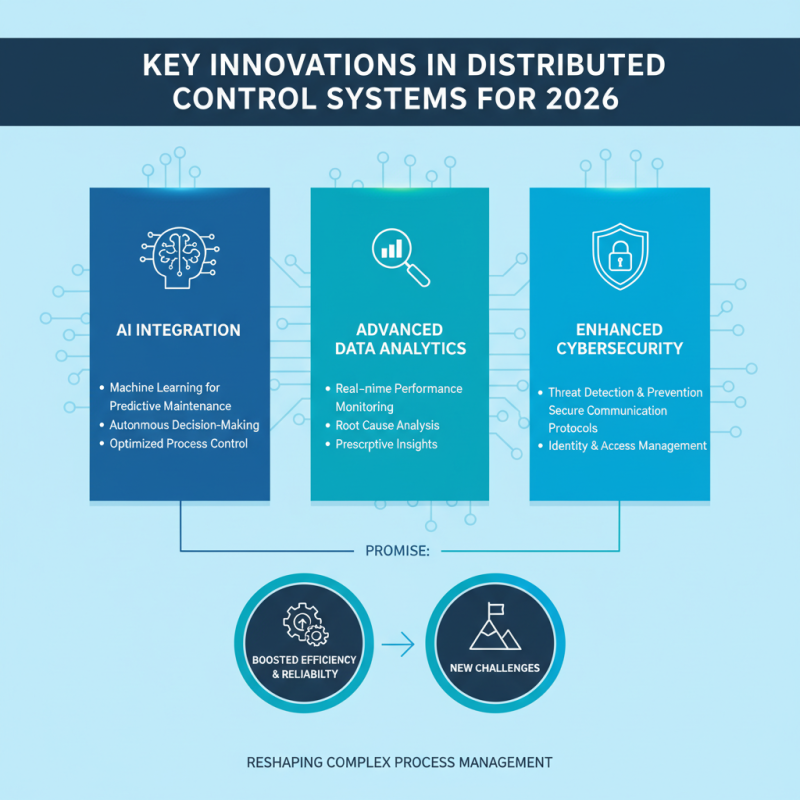
Key Innovations in Distributed Control Systems for 2026
As we move towards 2026, the landscape of distributed control systems (DCS) is evolving rapidly. Innovations are reshaping how industries manage complex processes. Key trends include advanced data analytics, AI integration, and enhanced cybersecurity measures. These features promise to boost efficiency and reliability, but they also create new challenges.
Tips: Embrace change. Your team must adapt to new systems and technologies. Continuous training is essential to maximize performance.
Another notable trend is the rise of cloud-based DCS solutions. These systems offer scalability and remote access capabilities. However, companies must navigate potential data vulnerabilities. This highlights the importance of implementing robust security protocols. Balancing innovation with security is crucial for success.
Tips: Prioritize risk assessments. Regularly review your cybersecurity measures to stay protected. Use real-time monitoring to catch vulnerabilities early.
The growth of IoT devices within DCS is also significant. Enhanced interconnectivity allows for improved data sharing and real-time decision-making. Still, dependency on these technologies may lead to challenges. Companies need to ensure that their infrastructure can handle increased demand. This ongoing evolution demands constant reflection on both strengths and weaknesses.
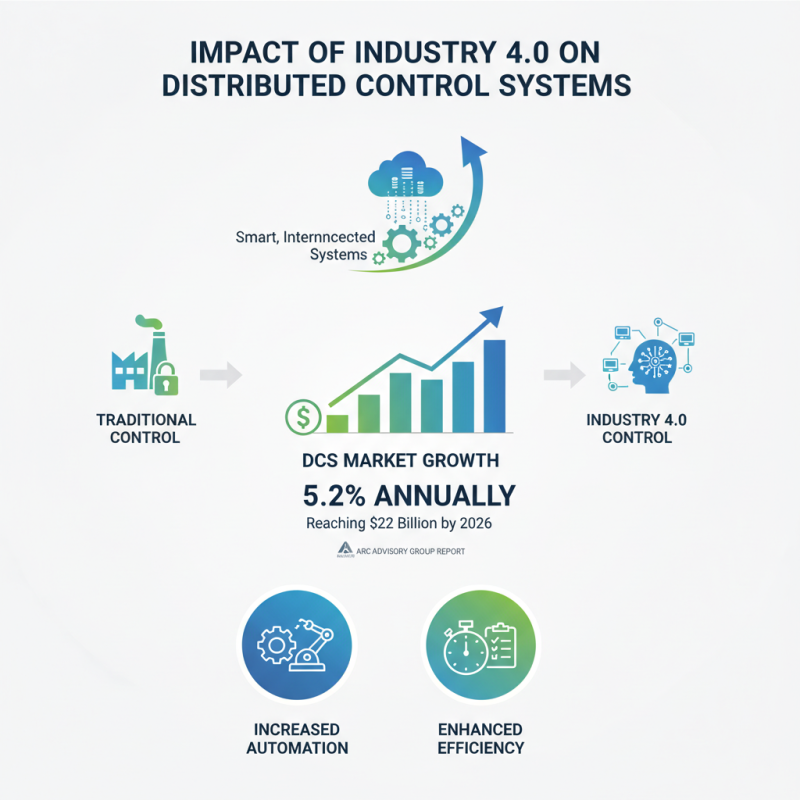
Impact of Industry 4.0 on Distributed Control Systems
The rise of Industry 4.0 has profoundly influenced distributed control systems (DCS). Organizations are shifting from traditional control methods to smart, interconnected systems. A recent report from ARC Advisory Group indicates that the DCS market is projected to grow by 5.2% annually, reaching $22 billion by 2026. This shift highlights the increasing demand for automation and efficiency.
Industry 4.0 emphasizes data-driven decision-making. It leverages the Internet of Things (IoT) for real-time monitoring and analytics. As a result, businesses can optimize processes, reduce downtime, and enhance productivity. However, integrating these advanced technologies can be challenging. Many companies face issues related to cybersecurity and data management. A study by McKinsey found that 70% of digital transformations fail to achieve their objectives.
**Tips:** Ensure all team members understand the new technologies. Regular training can improve efficiency. Invest time in cybersecurity measures to protect valuable data. Encouraging a culture of feedback can help identify gaps and improve system performance. As we navigate this transformation, continuous evaluation and adaptation will be essential for success.
Integration of Artificial Intelligence in Control System Operations
Artificial Intelligence (AI) is reshaping control system operations. In recent years, AI has improved efficiency and accuracy in various industries. The integration of AI enables predictive maintenance, reducing unexpected downtime. This shift is transforming operations, ensuring smooth and reliable processes.
When implementing AI, consider these tips. Understand your data quality. Reliable data enhances AI predictions. Regularly validate your algorithms. They must adapt to changing conditions. Lastly, train your team to leverage AI tools effectively. A skilled workforce maximizes technology benefits.
The journey with AI in control systems is not without challenges. Many organizations struggle with initial integration. Identifying suitable AI solutions can be overwhelming. Moreover, employee resistance to change might impede progress. Organizations must address these hurdles to realize AI's full potential.
Trends in Cybersecurity for Distributed Control Systems
In 2026, cybersecurity will play a pivotal role in the landscape of Distributed Control Systems (DCS). Recent studies indicate that nearly 70% of industrial cyberattacks target operational technology, including DCS. This surge in threats stems from increased connectivity and reliance on the Internet of Things (IoT). As systems become more integrated, vulnerabilities multiply.
The National Institute of Standards and Technology (NIST) emphasizes that proactive cybersecurity measures are critical. Implementing real-time threat detection can halt potential breaches early. However, many organizations struggle with incident response plans. A report by the International Society of Automation suggests that up to 40% of companies lack a formal cybersecurity strategy for their DCS, leading to prolonged system downtimes and financial losses.
Training employees is another area needing attention. A study from the Ponemon Institute reveals that 55% of data breaches arise from human error. This calls for continuous training programs to improve awareness and preparedness. Despite advancements in technology, the human element remains a weak link. Organizations must focus on strengthening both technology and workforce capabilities to mitigate risks effectively.
2026 Top Distributed Control System Trends in Cybersecurity
The Role of Cloud Computing in Modern Control Systems
Cloud computing is revolutionizing modern control systems. It offers greater flexibility and scalability. Many industries use it to enhance their operations. With real-time data processing, organizations can make informed decisions faster.
Utilizing cloud-based control systems allows for seamless connectivity. These systems handle large volumes of data efficiently. They can also integrate various devices and software. However, challenges may arise, such as cybersecurity threats. Organizations need to prioritize data protection.
Tip: Regularly update cloud security protocols. Ensure all employees are trained on best practices.
The shift to the cloud can be daunting. Some may face resistance due to existing infrastructure. It is crucial to weigh the benefits against the risks. Understanding the potential pitfalls will aid in making a smooth transition.
Tip: Assess current systems before migrating. Create a clear roadmap to address potential issues.
2026 Top Distributed Control System Trends You Should Know
| Trend |
Description |
Impact |
Forecast Year |
| Cloud Integration |
Increased use of cloud services for data storage and analytics. |
Enhanced scalability and flexibility in control systems. |
2026 |
| AI and Machine Learning |
Utilizing AI-driven analytics for predictive maintenance. |
Reduced downtime and optimized operations. |
2026 |
| Edge Computing |
Processing data at the edge of the network for real-time analysis. |
Minimized latency and improved response times. |
2026 |
| Cybersecurity Enhancements |
Stronger security protocols to protect against evolving threats. |
Increased trust and reliability in control systems. |
2026 |
| Interoperability Standards |
Development of standards for seamless communication between devices. |
Improved integration across different systems. |
2026 |