How to Understand Control Systems and Their Applications?
Control Systems play a crucial role in modern engineering. Industries heavily rely on these systems for automation and efficiency. In fact, the global control systems market is projected to reach $140 billion by 2026, according to recent industry reports. This growth highlights their importance across various sectors, including manufacturing and transportation.
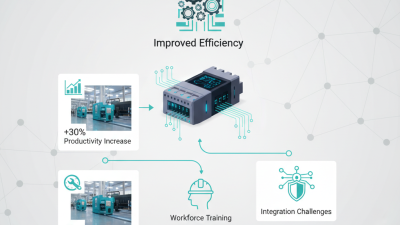
Understanding Control Systems can be complex yet rewarding. They involve feedback loops, sensors, and actuators to maintain desired outputs. However, many people struggle with the intricacies. Misinterpretations can lead to inefficient designs or system failures, causing significant financial losses. For example, a poorly calibrated control system can reduce production efficiency by over 30%.
In an era of rapid technological advancement, mastering Control Systems is essential. Industries are facing an increasing demand for smarter, more responsive systems. The challenge lies in keeping up with evolving technologies while ensuring reliability. Ignoring these aspects can impede progress. Thus, examining the fundamentals and applications of Control Systems offers valuable insights and understanding for both novices and seasoned professionals.
Understanding the Fundamentals of Control Systems: Key Concepts and Terminology
Control systems are essential in modern engineering. They regulate various processes and enhance efficiency. Understanding their key concepts is critical for effective application.
One fundamental concept is feedback. Feedback helps maintain system stability. It adjusts outputs based on desired goals. For example, in temperature control, a thermostat uses feedback to keep the environment comfortable. This idea may seem straightforward, but implementing it can be complex. Sometimes, the system may respond unpredictably.
Here are some tips for grasping control systems better:
- Focus on one concept at a time.
- Use diagrams to visualize processes.
- Experiment with simulations to see concepts in action.
Another important term is the
transfer function. It describes the relationship between input and output. This function enables engineers to analyze system behavior. However, interpreting transfer functions can be tricky. Small changes can lead to significant differences in performance.
Understanding these basics is crucial. Yet, don't overlook the real-world complexities. Engaging with
practical examples is essential. That way, you’ll build a deeper comprehension of control systems.
Types of Control Systems: Open-Loop vs. Closed-Loop Control Mechanisms
Control systems play a crucial role in various fields. They manage processes by adjusting inputs to achieve desired outputs. Understanding the difference between
open-loop and
closed-loop systems is essential.
Open-loop systems operate without feedback. An example is a microwave. It runs for a set time without checking
if the food is cooked. While simple, they can lead to errors. This approach lacks self-correction.
Closed-loop systems, however, use feedback. A thermostat adjusts heating based on temperature readings. This
mechanism helps maintain desired conditions. They are often more accurate. If the system goes off, it can adjust accordingly.
Tips: Always evaluate the needs of your application. Is feedback essential for
precision? Consider the costs. Closed-loop systems may require more complex setups. However, they often save resources in the long run.
Applications of Control Systems in Various Industries: A Comprehensive Overview
Control systems play a crucial role in various industries, influencing how processes and operations are managed. In manufacturing, they optimize production lines. Automated assembly lines rely on control systems to regulate speed and precision. This helps reduce waste and improve efficiency. However, not every system functions perfectly. Mechanical failures can disrupt workflows. Regular maintenance is essential to sustain operations.
In the field of healthcare, control systems monitor patient vitals. They track critical parameters like heart rate and blood pressure. Alerts are triggered if values fall outside normal ranges. While these systems enhance patient safety, they are not foolproof. False alarms can lead to alarm fatigue among staff, creating a challenge in maintaining alertness.
Transportation also benefits from control systems. Traffic management systems reduce congestion and improve safety. Real-time data helps adjust signals to flow better. Yet, these systems can struggle during unexpected situations, such as accidents or extreme weather. Increased adaptability could enhance their effectiveness.
Key Performance Metrics for Control Systems: Stability, Accuracy, and Responsiveness
Control systems play a vital role in various industries, impacting everything from manufacturing to transportation. Key performance metrics are essential for assessing their effectiveness. Stability is one metric that cannot be overlooked. A stable control system ensures consistent performance under varying conditions. According to industry data, nearly 70% of control failures are attributed to instability. This statistic highlights the importance of careful design and testing.
Accuracy is another critical aspect. A precise control system minimizes errors in output. Industries, such as aerospace, expect accuracy rates above 99%. Yet, achieving this level can be challenging. Addressing factors like sensor calibration and environmental fluctuations is crucial for maintaining high accuracy. In precision-driven sectors, even slight deviations can lead to significant problems.
Responsiveness is equally important. A control system must react quickly to changes. Data shows that a delay of just 0.1 seconds can affect system performance dramatically. Many systems fall short in this area, leading to user frustration. Mitigating latency is vital, but it can also introduce complexity. Finding a balance between responsiveness and system stability requires ongoing evaluation and refinement.
The Role of Modern Technology: AI and Machine Learning in Control Systems
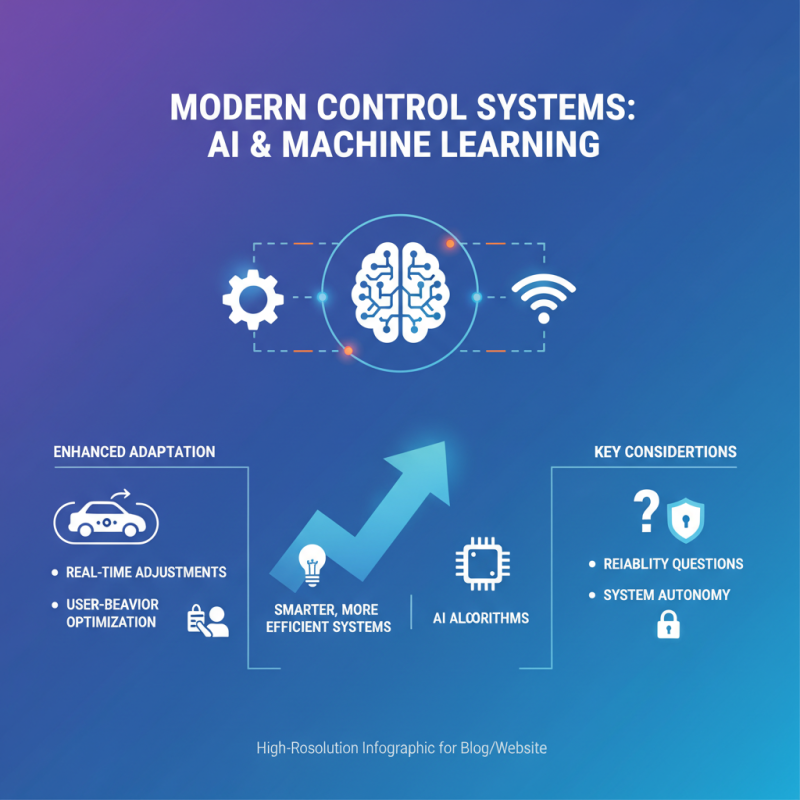
Modern technology has significantly transformed control systems, specifically through artificial intelligence and machine learning. These technologies enhance the ability of systems to adapt in real time. For instance, an AI algorithm can fine-tune a device's performance based on user behavior. This capability leads to smarter, more efficient systems, but it raises questions about reliability.
Machine learning algorithms learn from data. They analyze patterns, allowing systems to predict outcomes. This process can optimize performance, but it can also introduce biases. An application might excel in one scenario but fail in another due to discrepancies in collected data. Balancing sophistication and simplicity remains a challenge.
Moreover, the integration of these technologies into control systems is still evolving. As systems become more autonomous, the risk of over-reliance on these technologies increases. Understanding the implications of AI-driven control is crucial. Innovators must consider both the benefits and potential pitfalls as they develop smarter systems. The journey has just begun.